Best Online Diploma Courses for Working Adults
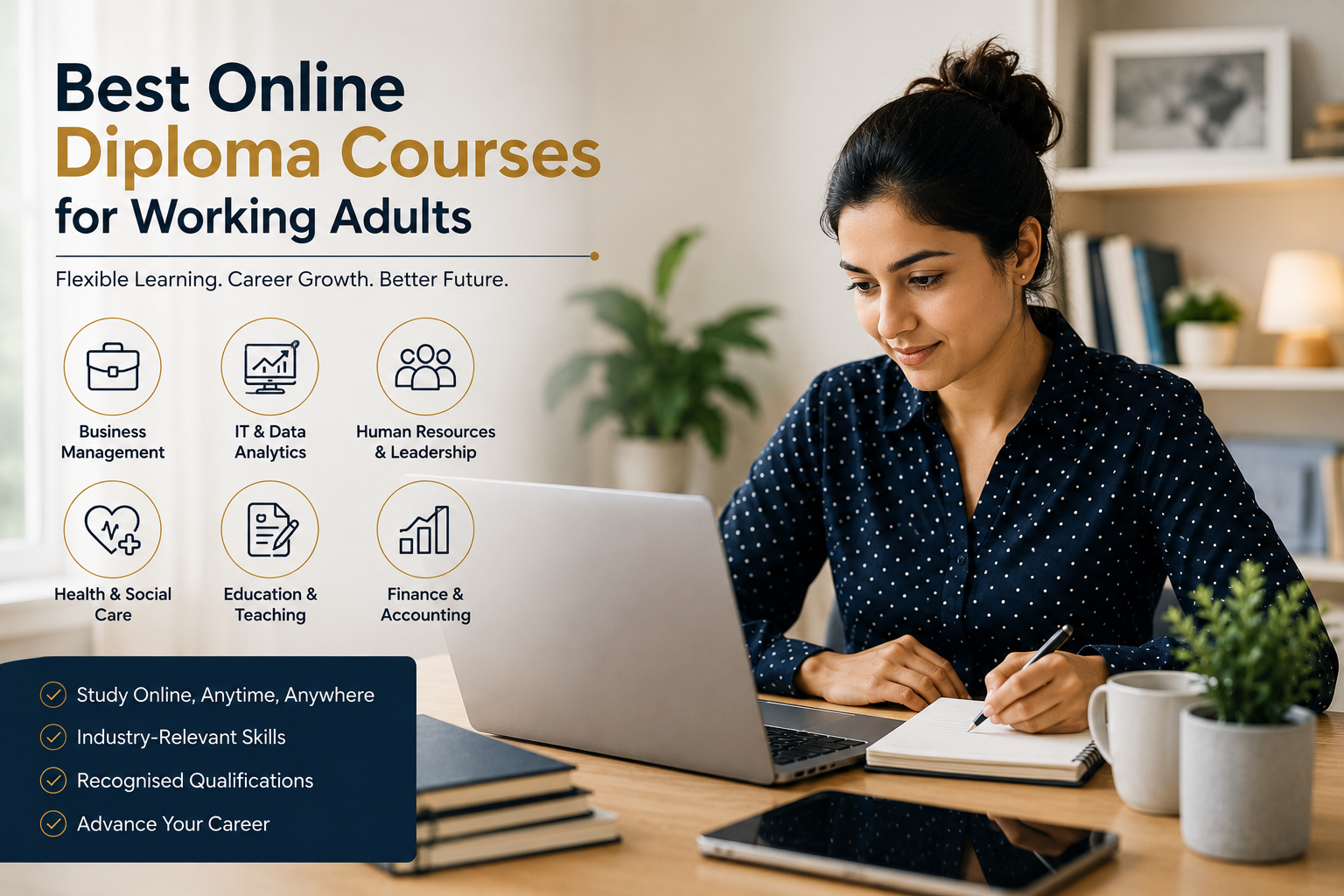
The best online diploma courses for working adults in the UK are those that combine recognised qualifications, flexible study, and strong career progression opportunities. Popular choices include Business Management, Health and Social Care, Cyber Security, Information Technology, Data Science, Education and Training, and Quality Assurance. The right course depends on your career goals, existing qualifications, industry experience, and whether you need a regulated qualification or professional development.
For many adults, returning to education can feel like a significant commitment. Balancing full-time work, family responsibilities, and personal obligations often makes traditional classroom learning impractical. Fortunately, modern online diploma programmes allow learners to gain recognised UK qualifications while continuing to work.
Whether you are seeking promotion, changing careers, developing specialist knowledge, or preparing for university progression, online diploma courses offer flexible pathways designed around busy lifestyles.
This guide explains the best online diploma subjects for working adults, how qualification levels compare, what employers value, and how to choose a programme that genuinely supports your long-term career ambitions.
Why Online Diploma Courses Are Ideal for Working Adults
Online diploma courses allow you to study at your own pace without giving up your current job. Most programmes provide flexible learning materials, tutor support, assignment-based assessment, and part-time study options that fit around professional and family commitments.
The Growing Demand for Flexible Learning
Adult education has changed considerably over the past decade. Instead of attending scheduled classroom sessions several evenings each week, many professionals now prefer learning that fits around their existing commitments.
Online diploma programmes typically allow learners to:
-
Study during evenings or weekends
-
Learn from any location with internet access
-
Progress at a comfortable pace
-
Access digital learning materials 24/7
-
Receive tutor guidance remotely
-
Continue earning a salary while studying
For employers, flexible learning also provides an effective way to upskill staff without disrupting business operations.
From a practical perspective, flexibility is often the deciding factor for working professionals. The ability to learn around work and family commitments is usually more valuable than completing a qualification as quickly as possible.
Benefits of Studying While Working
Choosing an online diploma offers several advantages over leaving employment to study full-time.
Benefits |
Why It Matters |
|
Continue earning |
No interruption to your income |
|
Immediate application |
Use new skills in your current role |
|
Flexible timetable |
Study around work shifts |
|
Career progression |
Prepare for promotion while employed |
|
Employer recognition |
Demonstrate commitment to professional development |
|
Reduced travel |
Learn from home without commuting |
|
Work-life balance |
Manage study alongside personal commitments |
Many employers actively encourage professional development and may even contribute towards course fees where qualifications support business objectives.
How We Selected the Diploma Categories
Rather than ranking courses from "best" to "worst", this guide recommends diploma categories based on different career goals, industries, and levels of professional experience.
Every learner has different objectives.
For example:
-
A care assistant seeking promotion has different needs from an IT technician.
-
A first-line manager requires different skills from an aspiring assessor.
-
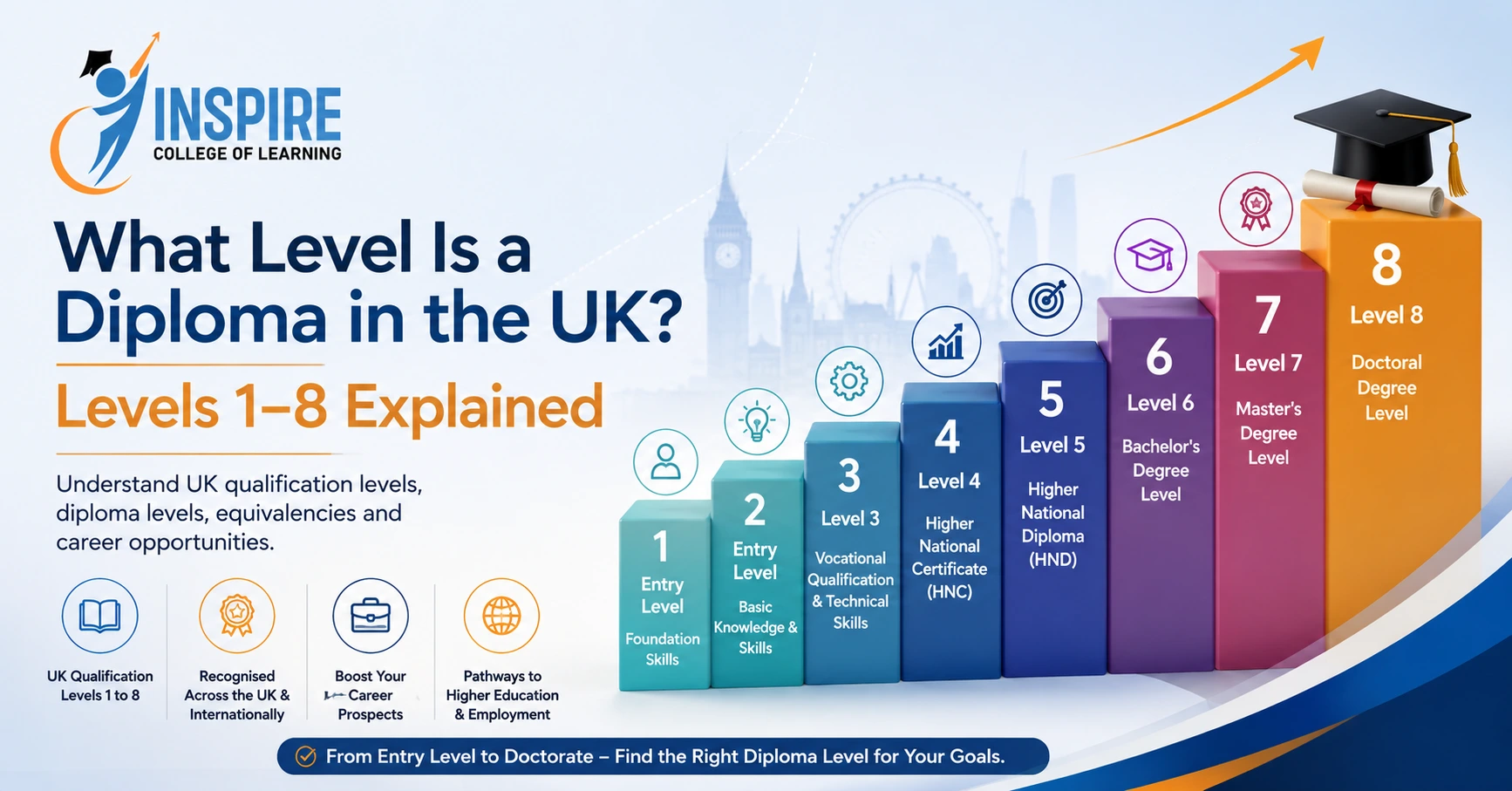
Someone changing careers may need an entry-level qualification, while an experienced manager may benefit from Level 5 or Level 7 study.
Our recommendations are based on several factors:
-
Career progression opportunities
-
Employer demand
-
Flexibility for working adults
-
Progression to higher qualifications
-
Industry relevance
-
Practical application
-
Recognition of the qualification
-
Long-term employability
In reality, there is no single "best" online diploma. The most suitable qualification is the one that aligns with your career ambitions and learning needs.
Best Online Diploma Courses for Working Adults
Overview Comparison
Diploma Category |
Best For |
Typical Qualification Levels |
Career Progression |
|
Business Management |
Supervisors and managers |
Level 3–7 |
Team Leader, Operations Manager, Senior Manager |
|
Health and Social Care Management |
Care professionals |
Level 3–7 |
Care Manager, Registered Manager |
|
Adult Care |
Care workers |
Level 2–5 |
Senior Care Worker, Deputy Manager |
|
Cyber Security |
IT professionals |
Level 4–7 |
Cyber Security Analyst |
|
Information Technology |
Technical professionals |
Level 3–7 |
IT Support, Systems Administrator |
|
Data Science |
Analytical professionals |
Level 4–7 |
Data Analyst, Business Intelligence |
|
Education and Training |
Trainers and educators |
Level 3–5 |
Tutor, Trainer |
|
Assessing and IQA |
Experienced vocational professionals |
Level 3–4 |
Assessor, Internal Quality Assurer |
|
Law |
Compliance and business professionals |
Level 4–7 |
Legal Administrator, Compliance Officer |
|
Psychology |
Learners seeking behavioural knowledge |
Level 4–7 |
Further study and related professional roles |
1. Business Management Diplomas – Best for Leadership and Career Progression
Who Is This Best For?
Business Management diplomas are well suited to:
-
Supervisors
-
Team leaders
-
Office managers
-
Entrepreneurs
-
Department managers
-
Business owners
-
Professionals seeking promotion
If your long-term goal is leadership, management, or strategic responsibility, Business Management remains one of the most versatile qualification pathways.
What You'll Learn
Typical modules include:
-
Strategic planning
-
Leadership
-
Organisational behaviour
-
Human resource management
-
Marketing
-
Project management
-
Financial decision-making
-
Business operations
These subjects build practical management capability rather than focusing purely on academic theory.
Career Opportunities
Graduates often progress into roles such as:
-
Operations Manager
-
Business Development Manager
-
Department Manager
-
Project Manager
-
Regional Manager
-
Senior Supervisor
Many learners also continue to higher-level diplomas before progressing to university top-up degrees where appropriate.
Why Working Adults Choose Business Management
Business Management qualifications apply across almost every industry.
Whether you work in retail, healthcare, logistics, hospitality, finance, education or manufacturing, leadership and management skills remain highly transferable.
One thing many applicants overlook is that management qualifications often improve confidence as much as technical knowledge. Learning how to lead people effectively can have a lasting impact on career progression.
2. Health and Social Care Management – Best for Care Sector Professionals
Who Is This Best For?
Health and Social Care Management diplomas are particularly suitable for:
-
Senior Care Workers
-
Care Coordinators
-
Deputy Managers
-
Residential Care Managers
-
Domiciliary Care Managers
-
NHS support professionals
These qualifications prepare learners for supervisory and management responsibilities within health and social care settings.
Topics Covered
Common study areas include:
-
Leadership in health and social care
-
Safeguarding
-
Quality improvement
-
Risk management
-
Person-centred care
-
Partnership working
-
Health legislation
-
Managing teams
Many programmes are assignment-based, allowing learners to demonstrate understanding through practical work rather than formal examinations.
Career Progression
Successful learners may progress into positions including:
-
Care Manager
-
Registered Manager
-
Service Manager
-
Operations Manager
-
Clinical Administration roles
-
Regional Care Manager
It is important to note that some management roles may also require relevant workplace experience alongside the qualification.
3. Adult Care Diplomas – Best for Frontline Care Professionals
Adult Care qualifications remain among the most popular choices for professionals already working in care settings.
They are suitable for:
-
Care Assistants
-
Support Workers
-
Residential Care Staff
-
Community Care Workers
-
Senior Care Workers
Unlike some academic qualifications, competence-based Adult Care diplomas often require learners to demonstrate practical skills in the workplace through observations, workplace evidence, and professional discussions where applicable.
Skills Developed
Learners commonly develop expertise in:
-
Person-centred support
-
Safeguarding adults
-
Communication
-
Equality and diversity
-
Infection prevention
-
Medication awareness
-
Duty of care
-
Professional practice
These qualifications help build both confidence and competence within real care environments.
4. Cyber Security Diplomas – Best for Digital Careers
Cyber Security continues to be one of the fastest-growing professional fields.
Organisations increasingly require skilled professionals who understand:
-
Information security
-
Risk management
-
Network security
-
Cyber threats
-
Digital investigations
-
Data protection
-
Security governance
Cyber Security diplomas can be particularly attractive for IT professionals seeking specialist knowledge or individuals planning a career change into digital security.
Typical Career Routes
After completing a suitable qualification, learners may pursue roles such as:
-
Cyber Security Analyst
-
Information Security Officer
-
Security Consultant
-
Network Security Administrator
-
Governance, Risk and Compliance (GRC) Specialist
While qualifications strengthen your knowledge and employability, many employers also value practical experience and industry-recognised certifications alongside formal study.
5. Information Technology and Data Science Diplomas – Best for Technical Upskilling
Information Technology (IT) and Data Science diplomas are ideal for professionals who want to develop practical digital skills, improve their technical knowledge, or move into high-demand technology roles. These qualifications are suitable for both experienced IT professionals and career changers who meet the entry requirements.
Technology continues to shape almost every industry, creating strong demand for professionals who understand digital systems, data analysis, cloud computing and emerging technologies.
Unlike short online courses that often focus on a single software application, diploma programmes usually provide broader knowledge that employers value over the long term.
Information Technology Diplomas
Best For
-
IT Support Technicians
-
Helpdesk Analysts
-
Network Administrators
-
Systems Administrators
-
Software Support Professionals
-
Career changers entering IT
Typical Topics
Depending on the qualification level, learners may study:
-
Computer systems
-
Networking
-
Database management
-
Cyber security fundamentals
-
Cloud technologies
-
Software development
-
Systems analysis
-
IT project management
These subjects help learners understand how modern IT environments operate while developing problem-solving and analytical skills.
Career Opportunities
Potential progression includes:
-
IT Support Engineer
-
Systems Administrator
-
Network Engineer
-
Infrastructure Technician
-
IT Project Coordinator
-
Technical Consultant
Data Science Diplomas
Best For
-
Business Analysts
-
Finance Professionals
-
Marketing Analysts
-
Data Administrators
-
Professionals interested in AI and analytics
Data is now central to business decision-making. Organisations rely on skilled professionals who can interpret information and transform it into practical business insights.
Typical Modules
You may study:
-
Data analysis
-
Business intelligence
-
Data visualisation
-
Statistics
-
Machine learning fundamentals
-
Data management
-
Artificial Intelligence concepts
-
Decision-making using data
From a practical perspective, Data Science is one of the most future-focused qualification areas. However, applicants should enjoy working with numbers, technology and logical problem-solving before choosing this pathway.
6. Education and Training Diplomas – Best for Aspiring Trainers and Tutors
Education and Training diplomas are suitable for professionals who wish to teach adults, deliver workplace training, or move into vocational education. They develop teaching, assessment and classroom management skills while providing recognised progression routes within further education.
Many experienced professionals eventually decide they would like to share their knowledge with others.
This qualification pathway supports careers such as:
-
Adult Education Tutor
-
Workplace Trainer
-
Vocational Lecturer
-
Skills Coach
-
Learning Facilitator
-
Training Officer
What You'll Learn
Modules commonly include:
-
Planning learning sessions
-
Teaching strategies
-
Inclusive learning
-
Assessment methods
-
Classroom management
-
Curriculum planning
-
Reflective practice
-
Supporting learner progress
Many qualifications combine theoretical knowledge with practical teaching experience.
Career Progression
Learners may progress into:
-
College teaching
-
Independent training delivery
-
Corporate learning and development
-
Apprenticeship training
-
Community education
-
Higher-level education qualifications
It is worth remembering that some teaching roles have additional sector-specific requirements beyond completing a diploma.
7. Assessing and Internal Quality Assurance (IQA) – Best for Experienced Vocational Professionals
Assessing and IQA qualifications are designed for experienced professionals who wish to assess vocational competence or support the quality assurance process within education and training organisations.
These qualifications are particularly popular among professionals working in:
-
Health and Social Care
-
Construction
-
Business Administration
-
Customer Service
-
Hospitality
-
Engineering
-
Education
Assessment Qualifications
Assessment qualifications prepare professionals to:
-
Assess occupational competence
-
Assess vocational knowledge
-
Conduct professional discussions
-
Review portfolios
-
Provide constructive feedback
-
Make fair assessment decisions
Internal Quality Assurance Qualifications
IQA qualifications focus on maintaining assessment quality by covering:
-
Sampling assessment decisions
-
Supporting assessors
-
Standardisation
-
Quality improvement
-
Compliance
-
Continuous monitoring
Many awarding organisations require assessors and IQAs to hold recognised assessor or quality assurance qualifications before carrying out these responsibilities.
8. Law Diplomas – Best for Business and Compliance Professionals
Law diplomas provide an excellent introduction to legal principles, business law and compliance. However, they do not by themselves qualify someone to practise as a solicitor or barrister in the UK.
This distinction is important because many prospective learners mistakenly assume any law qualification leads directly to professional legal practice.
Best For
-
Compliance Officers
-
HR Professionals
-
Business Managers
-
Administrators
-
Company Directors
-
Individuals considering further legal study
Common Topics
Learners may study:
-
Contract law
-
Employment law
-
Company law
-
Legal systems
-
Business ethics
-
Commercial law
-
Regulatory compliance
These qualifications strengthen legal awareness that can be applied across many industries.
9. Psychology Diplomas – Best for Behavioural Understanding
Psychology diplomas are suitable for learners interested in human behaviour, mental processes and personal development. They provide valuable knowledge but do not normally lead directly to protected psychologist titles without further approved education and professional registration.
Psychology is increasingly relevant within:
-
Human Resources
-
Education
-
Health and Social Care
-
Coaching
-
Counselling support
-
Customer experience
-
Management
Typical Modules
Topics often include:
-
Cognitive psychology
-
Social psychology
-
Developmental psychology
-
Research methods
-
Behavioural science
-
Personality
-
Mental wellbeing
Many learners continue to higher education after completing these qualifications.
10. Child Care and Tourism & Hospitality – Best for Sector-Specific Careers
These specialist qualifications support learners who wish to progress within particular industries.
Child Care
Suitable for:
-
Early Years Practitioners
-
Nursery Assistants
-
Childminders
-
Teaching Assistants
Typical study areas include:
-
Child development
-
Safeguarding
-
Learning through play
-
Health and wellbeing
-
Observation and assessment
Some qualifications require workplace placement or practical assessment.
Tourism and Hospitality
Suitable for:
-
Hotel Supervisors
-
Hospitality Managers
-
Tourism Professionals
-
Customer Service Managers
Subjects often include:
-
Hospitality operations
-
Customer service
-
Business management
-
Tourism marketing
-
Event management
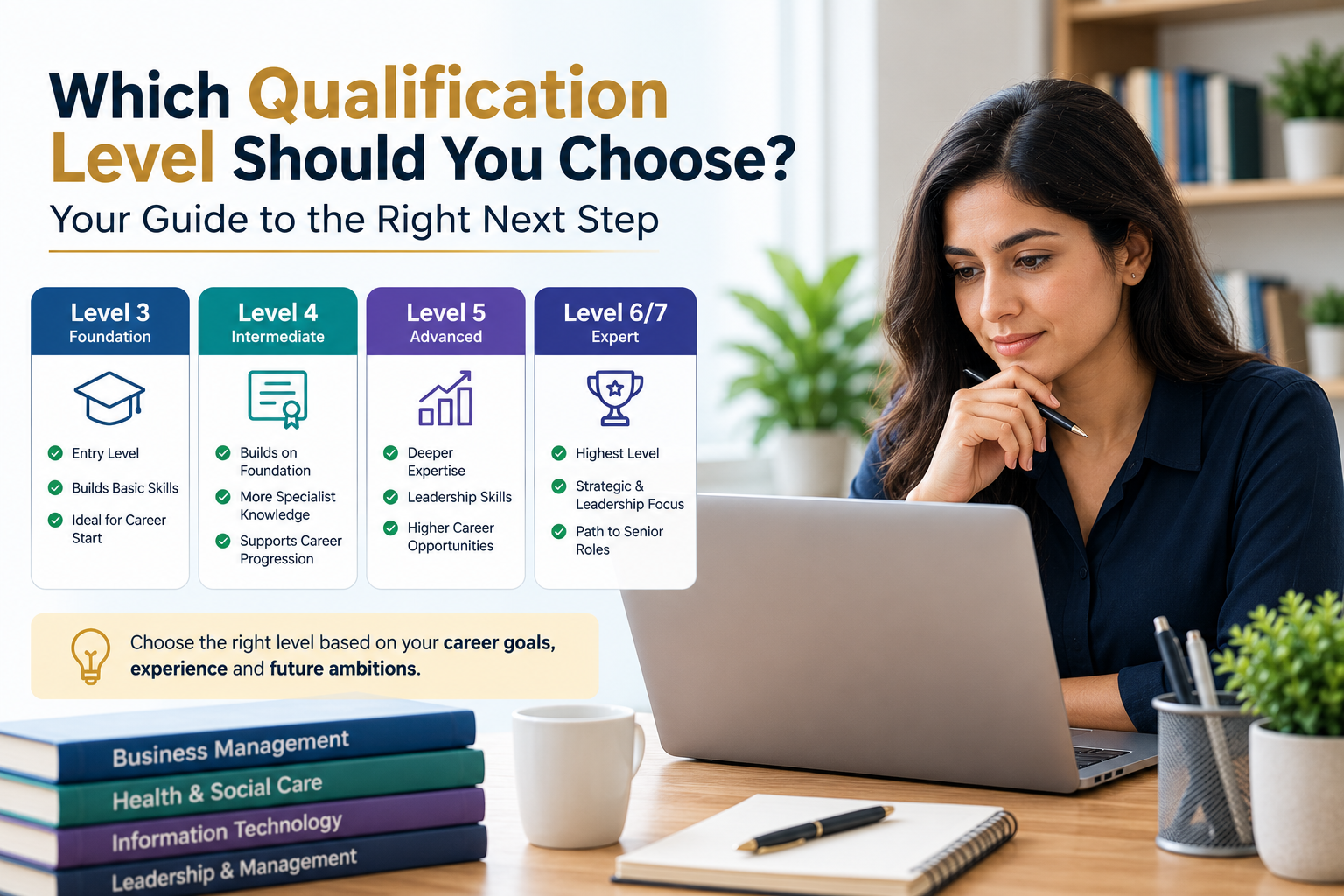
Which Qualification Level Should You Choose?
Choosing the correct qualification level depends on your existing education, professional experience and long-term career goals. There is no universally "best" level—only the level that is most appropriate for your circumstances.
Qualification Level Comparison
|
Level |
Typical Suitable Applicant |
Typical Progression |
|
Level 3 |
Beginners or those with limited experience |
Employment or Level 4 |
|
Level 4 |
Experienced professionals seeking supervisory skills |
Level 5 |
|
Level 5 |
Managers and senior practitioners |
University Top-Up or Level 6 |
|
Level 6 |
Experienced professionals seeking advanced knowledge |
Postgraduate study |
|
Level 7 |
Senior managers and strategic leaders |
Master's progression where accepted |
How to Decide
Ask yourself:
-
Am I starting a new career?
-
Am I aiming for promotion?
-
Do I already hold a qualification?
-
Do I need practical workplace assessment?
-
Am I planning to progress to university?
One thing many applicants overlook is that choosing a qualification above your current experience level may not always be the fastest route to success. Building knowledge progressively often produces stronger long-term outcomes.
How to Check Whether an Online Diploma Is Recognised
Before enrolling, verify the qualification, awarding organisation and regulatory status. A recognised qualification should clearly state who awards it and, where applicable, whether it is regulated.
Recognition Checklist
Before paying for any course, check:
✓ Who is the awarding organisation?
✓ Is the qualification regulated where applicable?
✓ Does the course clearly state its qualification level?
✓ Are progression routes explained?
✓ Are assessment methods transparent?
✓ Is tutor support included?
✓ Are entry requirements clearly described?
✓ Are workplace requirements disclosed?
✓ Can the provider explain employer recognition?
We generally recommend reading the qualification specification carefully rather than relying solely on promotional material.
Can You Study While Working Full-Time?
The answer is yes—many working adults successfully complete online diploma qualifications while remaining in full-time employment.
Success usually depends on effective planning.
Many learners dedicate:
-
8–12 hours per week for Level 3 programmes
-
10–15 hours per week for Level 4–5 study
-
12–18 hours per week for advanced Level 6–7 qualifications
Actual study time varies depending on the qualification, your previous experience and your preferred pace of learning.
Tips for Balancing Work and Study
-
Create a weekly study timetable.
-
Set realistic milestones.
-
Complete assignments well before deadlines.
-
Communicate with your employer if support is available.
-
Make use of tutor feedback and learner resources.
-
Study consistently rather than leaving work until the last minute.
A common mistake is underestimating the time needed for reading, research and assignment preparation. Short, regular study sessions are often more effective than occasional long sessions.
Costs, Duration, Assessment and Tutor Support
The cost, duration and assessment method of an online diploma vary depending on the qualification level, awarding organisation and provider. Most online diploma programmes are designed to be flexible, allowing working adults to study part-time while balancing employment and personal commitments. Before enrolling, compare the total cost, expected study time, assessment methods and level of learner support available.
How Long Does an Online Diploma Take?
There is no single completion time for all diploma qualifications. Factors that influence the duration include:
-
Qualification level
-
Total credit value
-
Your previous experience
-
Weekly study hours
-
Whether the course is self-paced or follows scheduled intakes
As a general guide:
Qualification Level |
Typical Study Pattern |
Approximate Completion Time* |
|
Level 3 |
Part-time |
6–12 months |
|
Level 4 |
Part-time |
9–15 months |
|
Level 5 |
Part-time |
12–18 months |
|
Level 6 |
Part-time |
12–18 months |
|
Level 7 |
Part-time |
12–24 months |
*Actual completion times vary between providers and qualifications.
How Are Online Diplomas Assessed?
Many UK online diploma programmes use continuous assessment rather than traditional written examinations.
Common assessment methods include:
-
Written assignments
-
Case studies
-
Reflective accounts
-
Professional discussions
-
Portfolios of evidence
-
Practical observations (where applicable)
-
Workplace evidence for competence-based qualifications
For example, Adult Care, Assessing and some Education qualifications may require learners to demonstrate competence in a real workplace. This requirement should always be explained before enrolment.
What Support Should You Expect?
Quality learner support is often just as important as the qualification itself.
A reputable online provider should normally offer:
-
Qualified tutors
-
Academic guidance
-
Assignment feedback
-
Email or online support
-
Learning resources
-
Progress monitoring
-
Technical assistance
-
Clear assessment guidance
In our view, responsive tutor support is one of the strongest indicators of a quality online learning experience. Even highly motivated learners benefit from timely feedback and expert guidance.
Employer Perspective: What Do Employers Value?
Employers usually value qualifications that are relevant to the role, demonstrate current professional knowledge and are awarded by recognised organisations. However, practical experience, transferable skills and a positive attitude remain equally important.
When reviewing applications, employers often consider:
-
Relevance of the qualification
-
Professional experience
-
Communication skills
-
Leadership ability
-
Problem-solving skills
-
Commitment to continuous learning
-
Industry knowledge
Completing an online diploma while working full-time can also demonstrate valuable personal qualities such as self-discipline, time management and commitment to professional development.
It is important to remember that no qualification guarantees employment or promotion. Career progression depends on a combination of education, experience and performance.
Common Myths About Online Diplomas
Myth 1: Online Qualifications Are Less Valuable
Reality: A recognised online qualification is assessed against the same learning outcomes regardless of how it is delivered. What matters is the qualification itself, not whether learning takes place online or in a classroom.
Myth 2: Employers Do Not Accept Online Learning
Reality: Many employers actively support online learning because it allows employees to continue working while developing new skills.
Myth 3: Every Diploma Is Regulated
Reality: Not every diploma is a regulated qualification. Some are CPD courses, while others are awarded by professional bodies or universities. Always check the awarding organisation and qualification status before enrolling.
Myth 4: Higher Levels Are Always Better
Reality: A Level 7 qualification is not automatically the best choice. The most suitable qualification depends on your existing knowledge, experience and career objectives.
Myth 5: Online Study Is Easier
Reality: Online learning offers flexibility, but it still requires commitment, organisation and consistent study. Success depends on effective time management and active engagement with the course.
Common Mistakes to Avoid
Many learners can improve their chances of success by avoiding these common mistakes:
-
Choosing a course based only on price.
-
Ignoring entry requirements.
-
Failing to check qualification recognition.
-
Underestimating study time.
-
Selecting a qualification that does not align with career goals.
-
Not asking about assessment methods.
-
Overlooking workplace evidence requirements.
-
Comparing qualifications based only on course titles.
From a practical perspective, spending time researching a qualification before enrolling can prevent costly mistakes later.
Who Should Choose an Online Diploma?
An online diploma may be suitable if you are:
-
Working full-time.
-
Looking for career progression.
-
Returning to education after a break.
-
Changing careers.
-
Seeking a recognised UK qualification.
-
Developing specialist knowledge.
-
Preparing for university progression where appropriate.
-
Looking for flexible study options.
Who Might Need a Different Study Route?
An online diploma may not be the best option if you:
-
Prefer full-time classroom learning.
-
Need extensive practical training that cannot be completed remotely.
-
Want immediate professional registration in a regulated profession.
-
Cannot currently commit regular study time.
-
Require a qualification that has mandatory placement requirements you cannot meet.
Choosing the right learning format is just as important as choosing the right qualification.
Decision Framework: How to Choose the Right Online Diploma
Use the following framework before making your decision.
|
Question |
If Yes |
Recommended Action |
|
Are you changing careers? |
✓ |
Consider an entry-level qualification relevant to your chosen sector. |
|
Are you seeking promotion? |
✓ |
Choose a qualification aligned with your current industry. |
|
Already working in management? |
✓ |
Consider Level 5–7 management qualifications. |
|
Need workplace assessment? |
✓ |
Confirm that you have access to an appropriate workplace. |
|
Planning university progression? |
✓ |
Check progression routes before enrolling. |
|
Working full-time? |
✓ |
Choose a flexible, part-time online programme. |
Final Thoughts
The best online diploma course for a working adult is not necessarily the most popular or the highest level. It is the one that aligns with your career aspirations, fits your current circumstances and supports your long-term professional development.
Whether you are aiming for your first supervisory role, planning a career change or preparing for senior leadership, online learning provides a flexible way to gain valuable knowledge while continuing to work.
Before enrolling, take time to compare qualification levels, assessment methods, recognition, tutor support and progression opportunities. An informed decision today can help you build a stronger and more rewarding career tomorrow.
Frequently Asked Questions
Q1. Is an online diploma worth it?
For many working professionals, yes. It offers flexibility, career development and the opportunity to gain recognised knowledge without leaving employment.
Q2. Can I study at my own pace?
Many providers offer flexible learning, although some programmes include recommended completion times or scheduled assessment deadlines.
Q3. Are there age limits?
Most online diploma programmes do not have an upper age limit. Mature learners are encouraged to apply if they meet the entry requirements.
Q4. Can I study from outside the UK?
Many providers welcome international applicants. Always check country-specific requirements before enrolling.
Q5. Do employers know I studied online?
Your certificate normally states the qualification awarded rather than the method of study.
Q6. Will I receive tutor support?
Reputable providers generally include tutor guidance, assignment feedback and learner support throughout the programme.
Q7. Can I progress to university?
Some diploma qualifications provide progression opportunities to higher-level study or university programmes. Always check the specific progression arrangements for your chosen qualification.
Q8. Are payment plans available?
Many providers offer instalment options, although availability varies between institutions.
Q9. What equipment do I need?
Most learners require a reliable internet connection, a computer or laptop, and access to standard productivity software.
Q10. Should I choose the cheapest course?
Price should never be the only deciding factor. Consider recognition, tutor support, assessment quality and career relevance before making your decision.
People Also Ask
Q1. What are the best online diploma courses for working adults in the UK?
Business Management, Health and Social Care Management, Cyber Security, Information Technology, Education and Training, Data Science and Quality Assurance are among the most popular options. The best choice depends on your career goals, experience and preferred industry.
Q2. Can I complete an online diploma while working full-time?
Yes. Many online diploma programmes are specifically designed for working adults and allow learners to study during evenings or weekends. Success depends on good time management and consistent study habits.
Q3. Are online diploma qualifications recognised by employers?
Employers generally focus on the qualification's relevance, awarding organisation and your ability to apply what you have learned. Always verify whether the qualification is recognised or regulated where applicable.
Q4. Which diploma level should I choose?
Choose the level that matches your current qualifications, work experience and future ambitions. If you are unsure, seek guidance from the course provider before enrolling.
Q5. Do online diplomas include examinations?
Many online diplomas are assessed through assignments, projects and portfolios rather than traditional examinations. Some qualifications include practical assessments where appropriate.
Q6. How many hours should I study each week?
Many working adults study between 8 and 15 hours each week, although this varies depending on the qualification level and personal learning pace.
Q7. Can international learners study UK online diplomas?
Many UK providers accept international applicants. However, learners should check entry requirements, assessment arrangements and whether any workplace evidence is required. A UK qualification does not automatically provide work rights or immigration status.
Q8. What is the difference between a regulated qualification and a CPD course?
A regulated qualification meets specific regulatory requirements and follows an approved framework where applicable. CPD courses are designed for professional development but do not necessarily carry regulated qualification status.
Q9. Can work experience replace entry qualifications?
Some providers may consider relevant professional experience alongside formal qualifications, depending on the programme and awarding organisation.
Q10. Will an online diploma guarantee promotion?
No. Qualifications improve knowledge and employability but cannot guarantee promotion, employment or salary increases.