
Business Management Qualifications Explained
Introduction
Business management remains one of the most popular areas of study in the UK and internationally, yet many prospective learners are unsure which qualification is right for them.
A quick search reveals dozens of diplomas, certificates, degrees, apprenticeships, and professional programmes. Some focus on practical management skills, while others prepare individuals for senior leadership roles. Understanding the differences can be challenging, particularly when education providers use varying qualification frameworks and progression routes.
In 2026, business skills are becoming increasingly valuable across every sector. Organisations are looking for professionals who can manage people, improve performance, analyse business challenges, oversee projects, and make informed strategic decisions. These skills are no longer limited to senior managers. Team leaders, supervisors, entrepreneurs, administrators, and specialists are often expected to demonstrate strong business awareness.
This guide explains business management qualifications in clear terms. It explores qualification levels, progression pathways, career opportunities, industry demand, and how professional diplomas can support long-term development.
Whether you are leaving school, changing careers, returning to education, or seeking promotion, this article will help you understand your options and choose a suitable pathway.

What Is Business Management?
Business management involves planning, organising, leading, and controlling organisational activities to achieve specific goals.
Managers oversee resources, people, budgets, processes, and projects while ensuring that businesses operate effectively and remain competitive.
Business management is a broad discipline that covers areas such as:
- Leadership
- Operations management
- Human resource management
- Strategic planning
- Marketing
- Finance
- Project management
- Organisational behaviour
- Business communication
- Risk management
Because these skills apply across industries, business management qualifications remain relevant in sectors including healthcare, retail, education, manufacturing, technology, finance, hospitality, logistics, and public services.
A business manager in a healthcare organisation may coordinate staff and budgets, while a manager in a technology company may focus on project delivery and business growth. Although their responsibilities differ, the underlying management principles are often similar.
 Why Business Management Qualifications Matter in 2026
The workplace has changed significantly over the past decade.
Organisations now operate across multiple locations, use digital technologies extensively, and rely on data-driven decision-making. Managers are expected to lead diverse teams, adapt to market changes, and maintain productivity in both remote and office-based environments.
As a result, employers increasingly value structured management education.
A recognised business management qualification can help individuals:
- Develop practical management skills
- Build confidence in leadership roles
- Improve decision-making abilities
- Gain industry-recognised credentials
- Support career progression
- Prepare for higher education
- Enhance employability across sectors
For employers, qualifications provide evidence that an individual has studied recognised management principles and understands professional business practices.
Understanding Business Management Qualification Levels
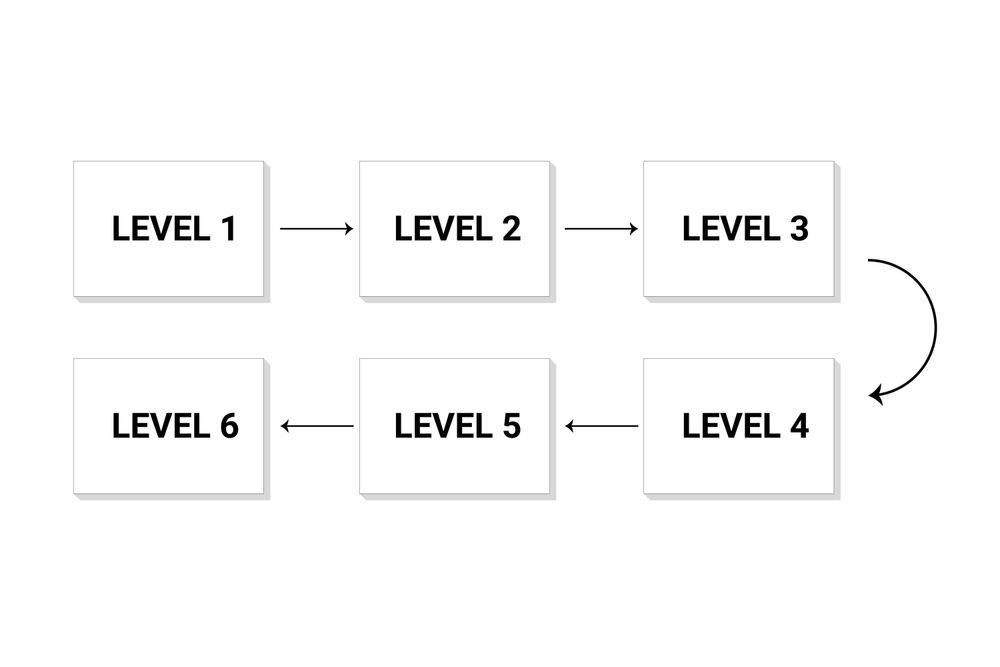
One of the most common questions people ask is:
"Which business management level should I start with?"
The answer depends on your previous education, work experience, and career objectives.
Level 3: Foundation Business Management Knowledge
Level 3 qualifications are often considered equivalent to A-Level study.
They provide an introduction to key business concepts and are suitable for:
- School leavers
- Individuals with limited management experience
- Career changers
- Those returning to education
Typical topics include:
- Business communication
- Marketing principles
- Customer service
- Finance fundamentals
- Business operations
- Working in organisations
Relevant programmes include:
These qualifications create a foundation for progression to higher-level business studies.
Level 4: Developing Management Capability
Level 4 qualifications are broadly comparable to the first year of undergraduate study.
They move beyond introductory knowledge and focus more heavily on management practice.
Common subjects include:
- Management theory
- Organisational behaviour
- Business environment analysis
- Professional development
- Entrepreneurship
- Resource management
Level 4 programmes are often suitable for:
- Aspiring supervisors
- Team leaders
- Junior managers
- Individuals progressing from Level 3 study
Examples include:
Level 5: Preparing for Management Responsibilities
Level 5 qualifications generally align with the second year of a bachelor's degree.
At this stage, learners begin applying management concepts to more complex business situations.
Areas of study often include:
- Leadership and management
- Managing change
- Business strategy
- Human resource management
- Financial decision-making
- Project management
Level 5 programmes are popular among:
- Existing managers
- Supervisors seeking promotion
- Business owners
- Professionals aiming for middle-management roles
Common options include:
- OTHM Level 5 Diploma in Business Management
- Qualifi Level 5 Diploma in Business Management
- Qualifi Level 5 Extended Diploma in Business Management
Many learners use Level 5 qualifications as a stepping stone toward university top-up degrees or advanced professional study.
Level 6: Advanced Management and Strategic Thinking
Level 6 qualifications are generally comparable to the final year of undergraduate study.
The focus shifts towards strategic management and organisational performance.
Typical topics include:
- Strategic planning
- Corporate governance
- Business research
- Organisational development
- Performance management
- Leadership strategy
A Level 6 business management qualification is often suitable for:
- Experienced managers
- Department heads
- Business owners
- Professionals preparing for senior management positions
A popular progression route is:
Level 7: Strategic Leadership and Senior Management
Level 7 qualifications align with postgraduate study and often provide progression toward MBA programmes or master's degrees.
These qualifications focus on:
- Strategic leadership
- Corporate decision-making
- Change management
- Governance
- Strategic risk management
- Organisational transformation
They are designed for:
- Senior managers
- Directors
- Entrepreneurs
- Business consultants
- Future executives
One recognised pathway is:
OTHM and Qualifi: What's the Difference?
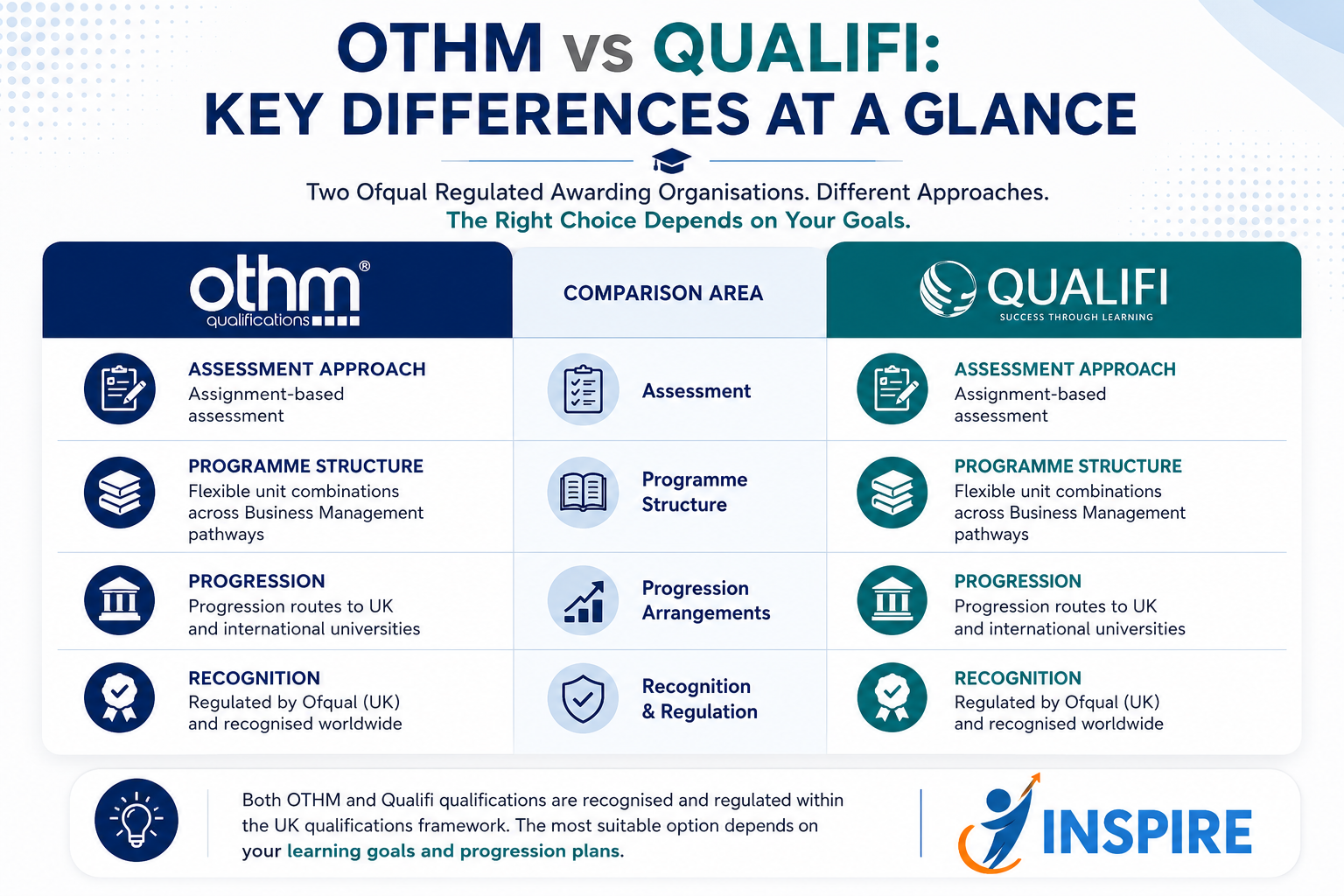
Many prospective learners encounter both OTHM and Qualifi qualifications and wonder whether one is better than the other.
In reality, both awarding organisations offer regulated qualifications recognised within the UK qualifications framework.
The main differences usually relate to:
- Programme structure
- Unit combinations
- Assessment approaches
- Progression arrangements with partner universities
Employers generally focus more on the qualification level, skills gained, and awarding body recognition rather than viewing one provider as significantly superior.
The most suitable option often depends on individual learning goals and progression plans.
Degree or Professional Diploma: Which Route Makes Sense?
This is another common question.
A traditional degree remains a respected qualification, but professional diplomas have become increasingly popular because of their flexibility and practical focus.
Advantages of Professional Diplomas
Professional diplomas often offer:
- Flexible online learning
- Faster progression routes
- Lower overall costs
- Practical business-focused content
- Opportunities for working professionals
- Progression into university top-up programmes
Advantages of University Degrees
Degrees may provide:
- A broader academic experience
- Campus-based learning opportunities
- Research-focused study
- Traditional graduate pathways
For many working adults, professional business management qualifications provide a practical balance between career development and flexible study.
Essential Business Skills Employers Look For
A qualification alone does not guarantee career success.
Employers are increasingly interested in the skills developed during study.
Leadership
Managers must motivate teams, handle challenges, and support organisational goals.
Effective leadership involves communication, accountability, emotional intelligence, and decision-making.
Communication
Strong communication remains one of the most valuable workplace skills.
Managers regularly:
- Conduct meetings
- Present information
- Resolve conflicts
- Provide feedback
- Communicate organisational changes
Problem Solving
Businesses face operational, financial, and strategic challenges daily.
Management qualifications teach structured approaches to analysing problems and implementing solutions.
Financial Awareness
Even managers who are not accountants need to understand budgets, costs, profitability, and financial performance.
Strategic Thinking
Organisations increasingly seek individuals who can see the bigger picture rather than focusing solely on day-to-day tasks.
Strategic thinking becomes particularly important at Levels 5, 6, and 7.
Business Management Careers and Progression Opportunities

A business management qualification can support progression across a wide range of roles.
Example Include:
Team Leader
Often the first step into management.
Responsibilities include supervising staff, monitoring performance, and supporting operational objectives.
Operations Supervisor
Focuses on efficiency, productivity, and process improvement.
Office Manager
Coordinates administrative functions, resources, and workplace operations.
Project Coordinator
Supports project planning, scheduling, reporting, and stakeholder communication.
Business Development Executive
Works on growth opportunities, partnerships, and client acquisition.
Department Manager
Oversees teams, budgets, targets, and performance indicators.
Operations Manager
Responsible for managing large-scale organisational activities.
Business Consultant
Provides advice on performance improvement, organisational development, and strategy.
Senior Leadership Roles
Higher-level qualifications can support progression into:
- Director positions
- Head of Department roles
- Senior Operations Management
- Strategic Leadership positions
- Executive Management
Business Management in Different Industries
One reason business management qualifications remain popular is their versatility.
Healthcare
Healthcare organisations require managers to oversee staffing, compliance, budgets, and service delivery.
Education
Schools, colleges, and training providers rely on managers to coordinate resources and organisational performance.
Technology
Technology businesses require managers who can lead projects, manage teams, and support growth.
Retail
Retail managers oversee operations, customer experience, staffing, and commercial performance.
Logistics and Supply Chain
Managers play a crucial role in planning, coordination, efficiency, and service delivery.
Because management principles transfer across industries, qualifications can support career mobility.
Online Business Management Qualifications: Are They Respected?
Online learning has become a mainstream route into professional education.
Employers increasingly focus on:
- Qualification level
- Awarding body recognition
- Practical skills gained
- Workplace performance
Rather than asking where a qualification was studied, employers are more likely to assess how effectively an individual applies their knowledge.
High-quality online business management programmes can provide the same learning outcomes as classroom-based study while offering greater flexibility for working professionals.
Choosing the Right Business Management Qualification

Selecting the right qualification involves considering several factors.
Your Current Education Level
Someone leaving school may start at Level 3, while an experienced supervisor may enter directly at Level 4 or Level 5.
Career Objectives
Consider where you want to be in three to five years.
If your goal is senior leadership, a progression route from Level 4 through Level 7 may be appropriate.
Work Experience
Practical experience often influences entry decisions.
Some qualifications allow progression based on professional experience rather than academic qualifications alone.
Study Flexibility
Working professionals should consider:
- Online learning options
- Assessment methods
- Study duration
- Work-life balance requirements
A Typical Business Management Progression Pathway
A common route might look like this:
Level 3 Diploma in Business Management
↓
Level 4 Diploma in Business Management
↓
Level 5 Diploma in Business Management
↓
Level 6 Diploma in Business Management
↓
Level 7 Diploma in Strategic Management and Leadership
↓
MBA or Master's Degree Progression
Not every learner follows the same path, but this structure demonstrates how professional qualifications can support long-term development.
The Future of Business Management Careers
Several trends are influencing management roles in 2026.
Digital Transformation
Managers increasingly oversee technology adoption, automation projects, and digital workflows.
Data-Informed Decision Making
Understanding business data is becoming a core management skill.
People-Centred Leadership
Employee wellbeing, engagement, and retention remain major priorities.
Sustainability and Corporate Responsibility
Many organisations are integrating environmental and social considerations into strategic planning.
Cross-Functional Management
Managers increasingly work across departments rather than within isolated functions.
Future managers will need both technical understanding and strong interpersonal skills.
Conclusion
Business management qualifications continue to offer a practical route into leadership, supervision, and organisational development roles. In 2026, employers increasingly value professionals who can manage people effectively, understand business operations, and contribute to long-term organisational success.
The right qualification depends on your experience, career goals, and current level of education. Whether you begin with a Level 3 diploma or progress directly into higher-level management study, professional qualifications provide structured development and recognised progression pathways.
Rather than choosing the highest level available, focus on selecting the qualification that matches your current position and future ambitions. A well-planned progression route can build knowledge gradually, strengthen management capability, and support career advancement across a wide range of industries.
Frequently Asked Questions
Q1. What is a business management qualification?
A business management qualification is a recognised programme that develops knowledge and skills related to leadership, operations, strategy, finance, communication, and organisational management.
Q2. Which business management qualification is best for beginners?
Level 3 qualifications are often suitable for individuals with limited management experience or those entering business studies for the first time.
Q3. Can I study business management online?
Yes. Many regulated business management qualifications are available through online learning, allowing individuals to study alongside work and personal commitments.
Q4. Is a business management diploma equivalent to a degree?
Certain diploma levels align with stages of undergraduate study. For example, Level 4 is broadly comparable to the first year of a degree, while Level 6 aligns with the final undergraduate level.
Q5. What jobs can I get with a business management qualification?
Potential roles include team leader, supervisor, office manager, project coordinator, operations manager, business consultant, and senior management positions.
Q6. Are OTHM and Qualifi qualifications recognised?
Yes. Both are regulated awarding organisations that offer qualifications within recognised UK frameworks.
Q7. Can a business management qualification lead to an MBA?
Many Level 7 management qualifications provide progression opportunities toward MBA top-up programmes or master's-level study, depending on university requirements.
Q8. How long does it take to complete a business management qualification?
Study duration varies by level, provider, and learning mode. Many online diploma programmes can be completed within several months to a year, depending on pace and commitment.